
Cifra 3 - Black
$750

The Art of Time
Solari has been making clocks since 1725, and in the twentieth century it invented the split-flap display that still turns over in railway stations and airports around the world. Solari Lineadesign, established in 2015, brings the company’s historic domestic clocks back into production in Udine, beginning with the Cifra 3.

Gino Valle’s split-flap table clock for Solari, patented in 1966, is in the permanent collections of the Museum of Modern Art in New York and the Science Museum in London. Solari Lineadesign returned it to production in 2015. PC-ABS body, 24-hour flap display, battery-driven stepper motor, 3.75" x 7" x 4.1", nine colors, made in Italy | $750–1,050
$750

$750

$750

$750
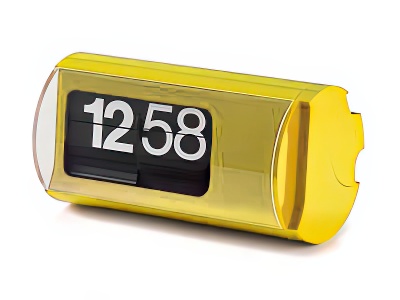
$1,050
Limited edition of 100
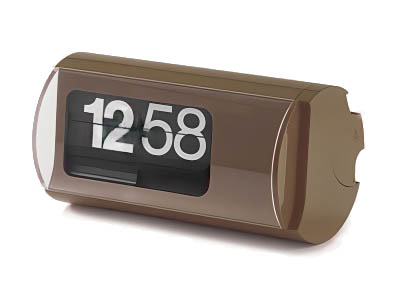
$1,050
Limited edition of 100
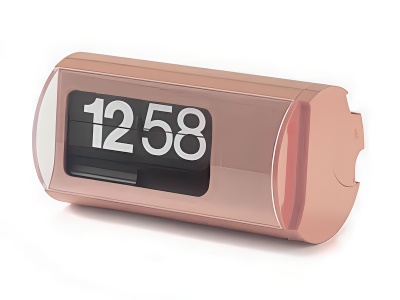
$1,050
Limited edition of 100

$1,050

$1,050

Solari’s calendar flip clock, first made in 1965: hours, minutes, weekday, and date on split flaps, with a perpetual calendar that handles leap years on its own. Renewed in 2026 with an app and a rechargeable battery, and built in Italian or English. PC-ABS body, 24-hour and date flap display, horizontal or vertical, black or white, made in Italy | $1,890

V: 13" x 9.5" or H: 4.5" x 26"

In 1725, the Fratelli Solari Company—known as the “Antica e premiata fabbrica di orologi da torre”—was established in Pesariis, a small town in the mountains of Carnia in Friuli, Italy. In the twentieth century, brothers Fermo and Remigio Solari transformed their entrepreneurial vision into business success with the invention of the flap system, revolutionizing the display of time and public information throughout the world.
The flap clocks for the home followed the public displays. The Cifra 5, designed by Gino Valle with graphic designer Michele Provinciali, won the Compasso d’Oro in 1956; the Emera 5 added the day of the week; and in 1965 the Dator 60 became the first direct-reading calendar clock. The Cifra 3 of 1966 reduced the idea to its smallest form.
Today the company is Solari S.p.A., and most of what it makes is public information rather than clocks: flight boards for the airports of Istanbul and Paris, on-board displays for Deutsche Bahn, the displays at Paris bus stops, time-and-attendance terminals, and smart lockers for the Italian post, with design and production still in Italy. The flap clocks are the small, domestic end of all that, made by the same company that still builds the boards.
Video courtesy Solari Lineadesign