
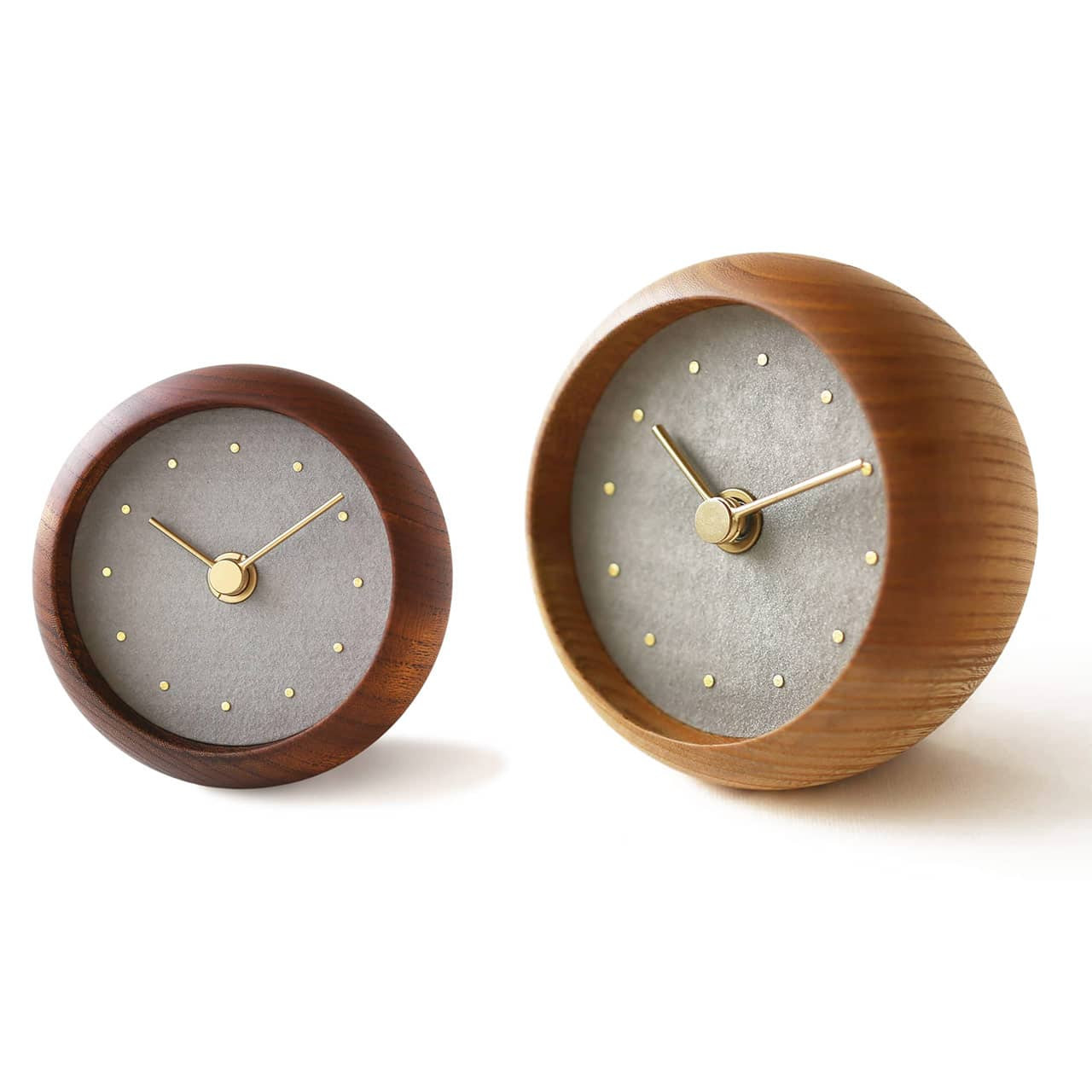
Hanamokko and Hanamokko Tou Usuzumi Table Clock - Light Ink

C-Brain

Usuzumi (Grey)

A grey that warms and cools with the light.
Crushed obsidian: a warm, even grey with a fine grain and a light sparkle, with gold leaf hour markers. Japanese zelkova body, turned by hand in Kanazawa. Two sizes: 3.8-inch Hanamokko and 5-inch Tou, numbered and made only for Clock Forward.
$170.00 - $290.00

Authentic C-Brain Produced in Japan · Premier US retail partner

Selected Choose Size & Wood Finish is

Your selection

Usuzumi (Grey)

$170.00 - $290.00
Adding to cart… The item has been added

Stock status shown above. Free US shipping from Charlotte, NC. In-stock items deliver in 1-6 business days.

Specifications

  • Origin: Handmade in Japan
  • Dimensions: Hanamokko: 3.8" h x 3.8" w x 2.1" d
    Hanamokko Tou: 5" h x 5" w x 2.5" d
  • Edition: Tou numbered, made only for Clock Forward
  • Materials: Japanese zelkova hardwood body with natural or stained finish sealed with polyurethane; crushed natural mineral pigment dial with gold-leaf hour markers; repurposed leather back; metal hands
  • Includes: Clock, AA lithium battery (installed), gift box, brochure, C-Brain pigment sheet, manual
  • Warranty: 2 years (manufacturer); 5 years on the movement
  • Returns: 7 days if unused · 5% restocking fee
  • Movement: Seiko silent quartz
  • Display: Hours and minutes
  • Weight: Hanamokko: 4.7 oz
    Hanamokko Tou: 10.5 oz
    *weights without battery
  • Power: 1.5 V AA battery

Hanamokko Usuzumi is a warm grey made from volcanic glass. The dial is crushed obsidian, and the name means thin ink, the diluted wash of ink painting, which is close to how it looks: an even mid-grey with a fine grain and a light sparkle up close. It warms or cools with the room and does not ask for attention. C-Brain makes each clock by hand in Kanazawa.

HOW HANAMOKKO IS MADE

The body is zelkova, turned on a lathe by hand in the technique called rokuro-hiki. The woodworker is Tatsuya Kutsumi of Yamanaka Onsen in Ishikawa Prefecture, a region with more than four hundred years of lacquerware production. Each one is cut so the core of the tree sits at the top of the case and again at the base, and the growth rings spread around the body between them, clearest on the Natural finish: one measure of time wrapped around another. The Black finish is a stain, so the grain shows through it, and in bright light some of the wood’s brown does too. The dial is iwa-enogu, the crushed-mineral pigment of traditional Japanese painting, laid down in about ten coats by a painter with more than twenty-five years of experience, so the grain of the stone stays visible. Beneath the pigment is kozo washi, a strong handmade paper prepared by Mayumi Ishikawa in Futamata, Kanazawa. The hour markers are small discs of gold leaf, and there are two hands, hour and minute, with no second hand. It uses a silent Seiko quartz movement, and the back is closed by a removable cover cut from leftover watch-strap leather, which we can engrave. Ko Ushijima designed the clock.

CHOOSING YOUR USUZUMI

Usuzumi sits in the middle of the range, with more contrast than white and less than black. The hands stay readable; the gold markers come and go with the light, clearest when a lamp strikes the dial from the side. Brown gives the grey a little color and a little contrast, and is the pairing we would pick. Natural is nearer the dial in tone and warms it. Black makes the clock nearly monochrome and is made to order. This is the dial for someone you know well enough to buy a gift for, though not well enough to guess a favorite color. The Tou is the larger Hanamokko, five inches across, numbered, and made only for Clock Forward. It gives this dial more reach across a room and the same calm.

DEALER’S NOTES

Under a lamp, the hands and wooden rim cast shadows that deepen the grey. Most of our clients put the smaller Hanamokko on a desk and the larger Tou on a shelf. On the pale dials, the hands are usually easier to see than the gold markers. On the darker dials, the markers stand out more. We do not think there is a wrong pairing of wood and dial. We stock the combinations our clients choose most and will order any other. Each clock ships from Charlotte in a gift box made for us, with a lithium battery already installed behind a paper pull tab, our brochure on the crafts behind it, and a five-year warranty on the movement. When the movement eventually needs replacing, you can do it yourself with our kit. A small clock does not need ten coats of mineral pigment or hand-cut gold leaf. C-Brain does it anyway.

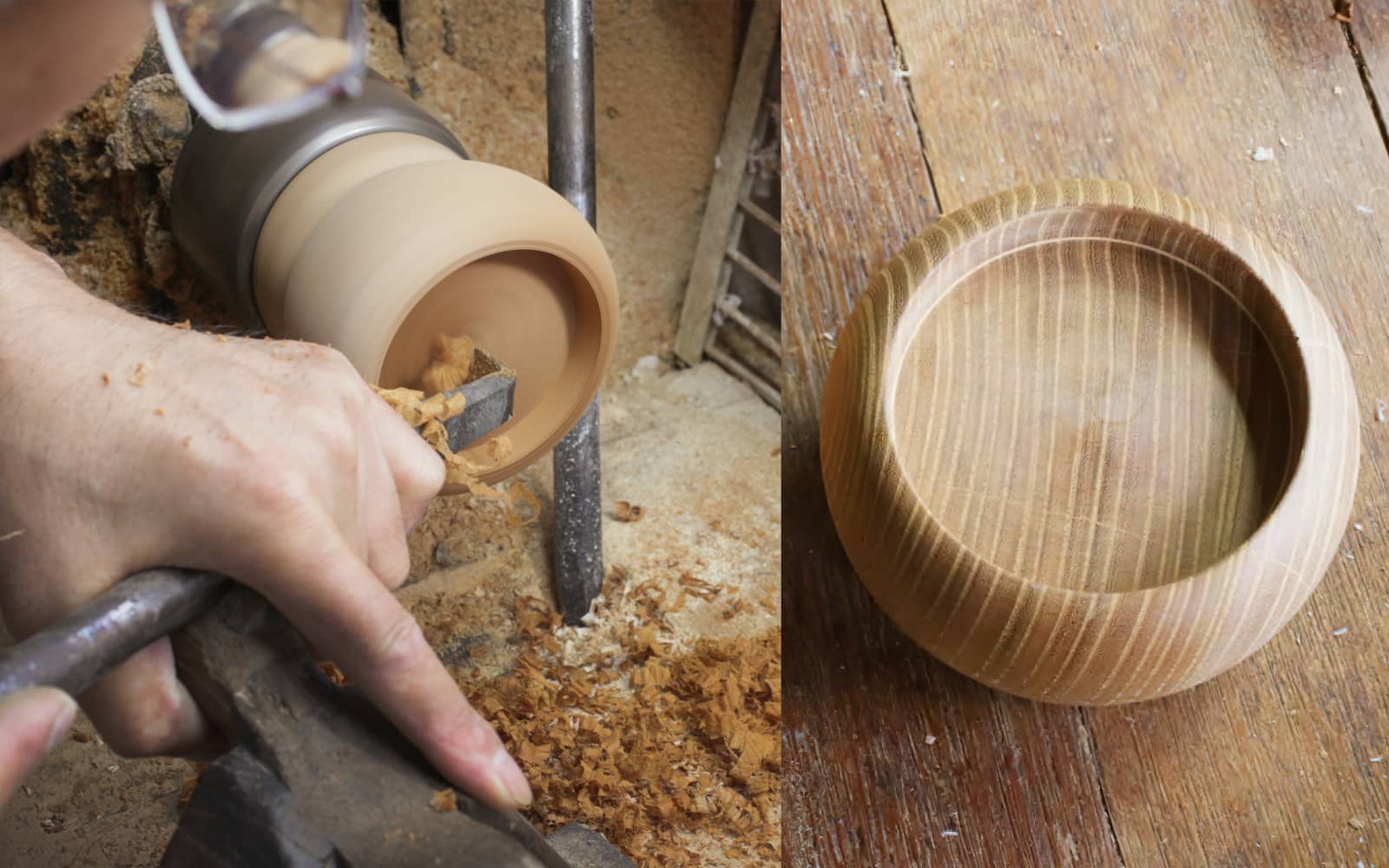
Video: Making the Hanamokko desk clock by C-Brain (Kanazawa, Japan)
C-Brain mineral pigment
Applying 10 layers of mineral pigments (iwa-enogu) evenly requires great skill is done by an experienced artisan. Shown: Obsidian
rokuro hiki carved zelkova wood
Each wooden body is handmade using a traditional technique called “rokuro hiki” where a blade is applied to a rotating tree and shapes the form.
c-brain Usuzumi (Grey) group
Usuzumi (Grey) with natural, brown or black stained Zelkova wood protected with a polyurethane coating.

Quick Help & Manual

Setting the time

Remove the leather cover by pulling the leather tab, and turn the time adjustment wheel so the hands rotate in a clockwise direction. It is OK if the hands move slightly counterclockwise if you are adjusting for a few minutes. Never set the time by manipulating the hands directly. Replace the leather cover when finished.

Battery

The clock is powered by one AA 1.5 V battery. We ship with an Energizer lithium long-lasting leak-proof battery that should last for several years. We also recommend Duracell alkaline batteries. It is important to remove or replace the battery once it stops working to prevent battery leakage and damage. Using a good battery helps extend the life of the movement.

When replacing the battery, lift the old battery out from the right (negative side). You may need to use a flathead screwdriver to gently assist in prying the battery out. Insert the new battery from the right (negative side) first by pushing into the spring, and then push down the positive (left) side.

Custom engraving

For a small fee, we can custom engrave a short message (and some logos) on the back leather piece. For larger corporate orders, it is possible to engrave the entire back.

Care and maintenance

Clean the clock occasionally with a soft microfiber cloth. The Zelkova wood is sealed with a clear polyurethane coat to resist wear. The mineral pigment dial is scratchable and should be carefully dusted with a soft brush or handheld blower (for cameras and small electronics). Change the battery as soon as the clock slows or stops. If you need to store your clock for a lengthy period, please remove the battery.

Where not to display

Avoid exposing the clock to direct sunlight to prevent the natural pigments from fading. Do not place in a very humid environment as warping and/or mold growth may occur.

Warranty & repairs

C-Brain clocks are guaranteed against defects under normal use, for 2 years on parts & labor from the date of purchase. Normal wear and tear damage or defects are excluded from warranty after 2 years. If purchased through Clock Forward, the movement is covered by a warranty for an additional 3 years (5 years total). We make the warranty process as simple as possible.

All mechanical parts are repairable and/or replaceable. Please contact us if you have any problems throughout the life of your clock—whether in or out of warranty.

Pre-Sale Questions

Please email or call the gallery with any question 1-704-981-0636.

How is the Hanamokko Tou different from the Hanamokko?

Hanamokko Tou is created exclusively for Clock Forward. Tou, meaning 10, refers to the 10 cm face diameter and 10 oz weight. It shares the same form, process, skilled artisans and materials as the smaller Hanamokko. It is more substantial with a clock face that is 57% larger and a weight that is more than double. Hanamokko Tou may show better in a larger interior and some may find it to be a more luxurious gift. Hanamokko Tou is numbered and created in small batches of 50 total, with a production time of 6-8 months. Very limited quantities of select variants are produced. You can secure your preference by pre-ordering.

Where will my clock ship from?

All clocks ship directly from Clock Forward in NC. We try to keep most smaller variants in stock, while there is currently a very finite supply of the Tou. If we need to custom order your selection, it will ship to us from Japan first for inspection and customs clearance. For multiple purchases, corporate gifts and deadline-sensitive orders, please contact us before purchasing.

Can I return a Hanamokko clock?

Yes. Unused and in its original packaging, a Hanamokko can be returned within 7 days of delivery; there is a 5% restocking fee and you cover return shipping. Choosing the right color is the usual dilemma, and we are glad to share our insight before you order — it is easier for everyone if we get it right the first time. If you are torn between two, contact us first and we will arrange for you to purchase both and return one. If your clock arrives damaged, defective, or incorrect, contact us right away and we will make it right. The seven days are for a change of mind; the warranty continues well beyond them. Full return policy.

Where are Hanamokko clocks made?

From the carved wooden bodies and native Zelkova wood to the hand-painted faces, all production takes place in Japan. The movement is made by Seiko in Thailand.

Is there a customs fee?

No, we handle importing and ship directly to you from the US. There is no additional customs charge or hassle.

Which Hanamokko clock has the highest visibility?

The Hanamokko Tou has a larger face and hour markers and is typically a better choice for larger interiors. We also recommend variants that either have dark hands on a light face or light hands on a dark face for highest visibility.

What is iwa-enogu?

Iwa-enogu is paint made from pulverized natural minerals. Mineral pigments were introduced to Japan 1400 years ago during the Asuka period. The pigment is known for its lightfastness, durability, color saturation, gritty texture and matte glimmering qualities. It is skillfully brushed in multiple layers onto a surface (ground) with a binder. On the Hanamokko Clock, the ground is paper made by Mayumi Ishikawa in Kanazawa City. The paper is then carefully adhered to the Zelkova wood body. Although durable, iwa-enogu surfaces can be scratched and should be treated like any painting.

What is rokuro-hiki?

Rokuro-hiki is a process where wood is rotated on a potter's wheel (rokuro) and shaped with a sharp blade. It is carved in the Yamanaka region—known for its lacquerware dating back to the 1500s.

Is the clock movement silent?

There is no ticking sound. The clock runs on a battery-operated silent sweep Seiko quartz movement. It is suitable for bedside display.

Is the clock readable in the dark?

No. It does not glow in the dark nor is there an LED light. It is viewable in low lighting if some light catches the clock. There is no current plan to add this functionality.

Is there an alarm?

No. There is no alarm on this clock.

How long do the movements last before requiring service?

With the proper care, quartz clock movements can last 10-25 years. They are reliable and inexpensive to replace. The movement is covered under a 5-year warranty for Clock Forward customers. For purchases out of warranty, we will have a replacement kit and instructions available.

How do you custom engrave?

We engrave the back leather cover of the clock below the logo using a CO2 laser. It's a small surface area, so be brief. Please allow an additional 1-2 weeks for engraving. For larger orders, it is possible to engrave blank leather backs without the C-Brain logo. Large orders are engraved by the factory.